
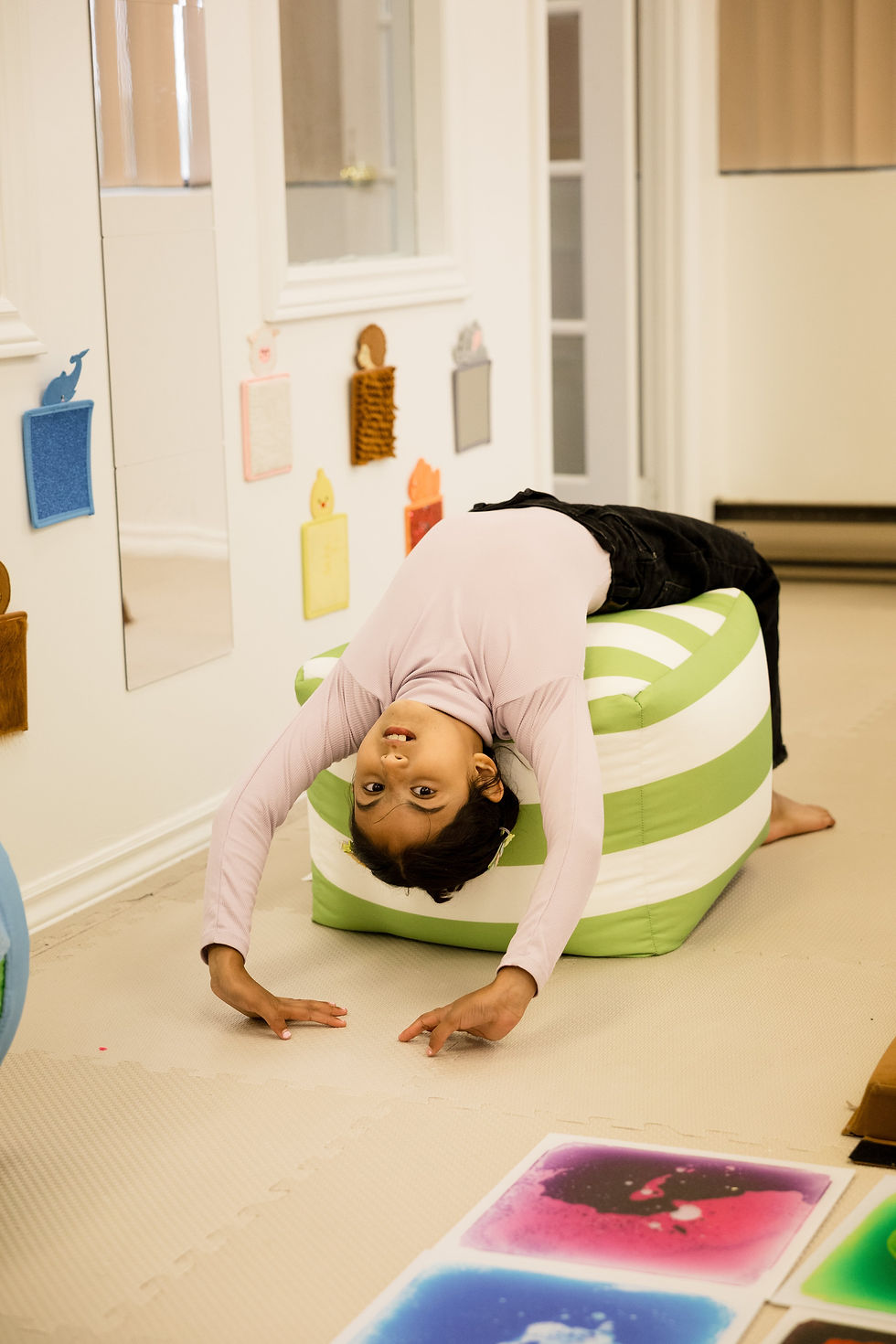
Sensory Processing and Regulation Difficulties

Sensory Processing and Regulation Difficulties
Sensory processing is how the brain receives, organizes, and responds to information from the senses: touch, sight, sound, movement, taste, smell, and body awareness. Children with sensory processing difficulties may struggle to respond appropriately to everyday sensory experiences. Some may be over-responsive (e.g., sensitive to clothing textures or loud noises), while others may be under-responsive (e.g., seeking intense movement or tactile input).
What delays may look like:
-
Avoiding certain textures, foods, or environments
-
Overreacting to sounds, lights, or touch
-
Difficulty calming down after overstimulation
-
Trouble focusing or sustaining attention in busy environments
-
Seeking intense sensory input such as jumping, spinning, or crashing
How OT helps:
Occupational therapists use sensory-rich, play-based activities to help children regulate their responses, improve attention, and participate more comfortably in daily life. Therapy focuses on building self-calming strategies, tolerance to sensory experiences, and adaptive coping skills that carry over into home, school, and community settings.