

Occupational Therapy Services
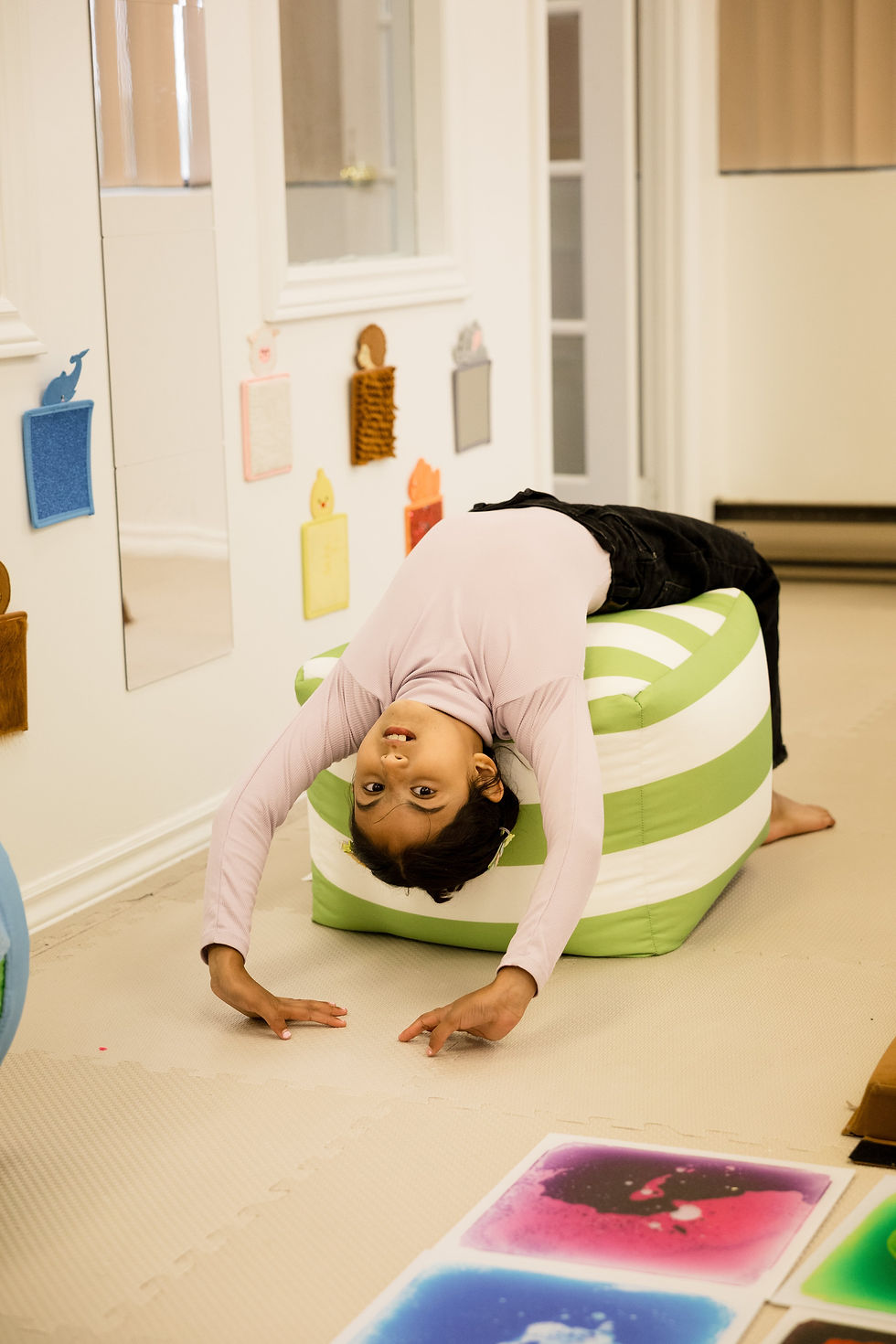
At Speech Ally, our Occupational Therapy services help children develop the skills they need to participate confidently in daily life, play, school, and social interactions. Our therapists use a child-centered, integrative, and play-based approach tailored to each child’s strengths and challenges.

Sensory Processing and Regulation Difficulties
Sensory processing is how the brain receives, organizes, and responds to information from the senses: touch, sight, sound, movement, taste, smell, and body awareness. Children with sensory processing difficulties may struggle to respond appropriately to everyday sensory experiences. Some may be over-responsive (e.g., sensitive to clothing textures or loud noises), while others may be under-responsive (e.g., seeking intense movement or tactile input).
What delays may look like:
-
Avoiding certain textures, foods, or environments
-
Overreacting to sounds, lights, or touch
-
Difficulty calming down after overstimulation
-
Trouble focusing or sustaining attention in busy environments
-
Seeking intense sensory input such as jumping, spinning, or crashing
How OT helps:
Occupational therapists use sensory-rich, play-based activities to help children regulate their responses, improve attention, and participate more comfortably in daily life. Therapy focuses on building self-calming strategies, tolerance to sensory experiences, and adaptive coping skills that carry over into home, school, and community settings.
Fine and Gross Motor Skill Development
Gross motor skills involve large movements like running, jumping, climbing, and balancing, while fine motor skills focus on precise hand and finger movements needed for tasks such as writing, drawing, and manipulating small objects. Both are essential for physical coordination, body awareness, and functional independence.
What delays may look like:
-
Difficulty running, hopping, catching, or climbing
-
Poor balance or frequent tripping/falling
-
Trouble with pencil grip, scissor use, or manipulating small objects
-
Weak hand strength or endurance
-
Difficulty completing motor-based classroom or play tasks
How OT helps:
Therapy incorporates structured gross and fine motor activities to strengthen muscles, improve coordination, and enhance hand-eye coordination and bilateral integration. Activities may include obstacle courses, ball games, manipulative toys, and hand strengthening exercises. The goal is to support participation in play, school, and daily routines confidently.


Handwriting and Pre-Writing Skills
Handwriting and pre-writing skills involve pencil control, letter formation, spacing, alignment, and legibility, as well as the ability to plan and organize ideas on paper. These skills are critical for academic success, written communication, and confidence in classroom tasks.
What delays may look like:
-
Messy, slow, or inconsistent handwriting
-
Difficulty forming letters or staying within lines
-
Fatigue during writing or drawing tasks
-
Avoidance of writing due to frustration or difficulty
-
Trouble organizing thoughts on paper
How OT helps:
Therapists provide targeted exercises to strengthen hand muscles, improve coordination, and develop proper grip, along with activities that promote visual-motor integration. Children also learn pre-writing strategies, such as tracing, copying patterns, and sequencing steps, to build confidence and efficiency in written work.
Attention, Focus, and Executive Functioning
Executive functioning skills include planning, organization, prioritization, task initiation, and self-monitoring. Attention and focus are essential for completing tasks, following multi-step instructions, and participating in school and home activities.
What delays may look like:
-
Difficulty sustaining attention on tasks
-
Trouble following multi-step directions
-
Disorganization of materials or inability to complete tasks efficiently
-
Forgetfulness or impulsivity during activities
-
Struggling to adapt to changes or shift strategies
How OT helps:
Therapists use structured, goal-oriented activities to strengthen planning, sequencing, time management, and problem-solving skills. Strategies include visual schedules, checklists, task breakdowns, and guided practice, helping children improve focus, organization, and independent task completion.


Motor Planning and Coordination
Motor planning is the ability to plan and execute coordinated movements, integrating the brain and body to perform new or complex actions. It supports functional independence, participation in play, and physical confidence.
What delays may look like:
-
Clumsiness, frequent tripping, or bumping into objects
-
Difficulty learning new movements or following movement sequences
-
Trouble with tasks requiring bilateral coordination (using both hands together)
-
Challenges with playground activities, sports, or physical routines
How OT helps:
Therapists use guided practice, repetition, and play-based exercises to strengthen motor planning and coordination. Activities may include obstacle courses, climbing, ball games, balance exercises, and sequencing tasks, helping children execute movements smoothly, safely, and confidently.
Self-Care and Independence (Feeding, Dressing, Toileting)
Self-care skills involve feeding, dressing, grooming, and toileting, supporting a child’s independence, confidence, and participation in daily life. Developing these skills promotes autonomy and reduces reliance on caregivers.
What delays may look like:
-
Trouble managing clothing fasteners, zippers, or buttons
-
Difficulty brushing teeth, washing hands, or toileting independently
-
Reliance on adults for feeding or other self-care tasks
-
Avoidance or frustration with self-care routines
How OT helps:
Occupational therapists teach step-by-step strategies and adaptive techniques to help children master daily routines. Therapy focuses on practical skills, problem-solving, and repetitive practice, ensuring children gain independence and confidence in everyday activities.

Emotional Regulation and Coping Skills
Emotional regulation refers to a child’s ability to recognize, manage, and respond appropriately to feelings and stressors. OT helps children develop coping strategies to manage emotions, stay focused, and interact positively with others.
What delays may look like:
-
Difficulty calming down after overstimulation
-
Emotional outbursts, frustration, or meltdowns
-
Trouble adapting to changes in routine
-
Challenges managing feelings in social or school settings
How OT helps:
Therapists use structured activities, sensory tools, and self-regulation strategies to help children identify emotions, practice coping techniques, and develop adaptive responses. Skills learned in therapy transfer to home, school, and community settings, improving overall functioning and participation.
Play and Social Participation Skills
Play is essential for learning, social interaction, problem-solving, and creativity. OT supports children in developing age-appropriate play skills, cooperative play, and social participation, helping them interact confidently with peers and adults.
What delays may look like:
-
Difficulty sharing, taking turns, or collaborating with peers
-
Limited engagement in imaginative or cooperative play
-
Avoidance of group activities or playground participation
-
Challenges initiating or maintaining interactions with others
How OT helps:
Therapists provide guided play activities, social stories, and group interactions to teach turn-taking, sharing, problem-solving, and communication skills. The goal is to promote confidence, social participation, and meaningful peer interactions.

_JPG.jpg)
School Readiness and Classroom Participation
OT helps children prepare for school by supporting motor, cognitive, sensory, and self-regulation skills required for academic routines and classroom participation.
What delays may look like:
-
Difficulty sitting, attending, or completing classroom tasks
-
Trouble following multi-step instructions or classroom routines
-
Disorganization of materials and workspace
-
Struggles with transitions or participation in group activities
How OT helps:
Therapists target functional skills, provide strategies for organization, attention, and self-regulation, and create opportunities to practice in school-like environments. Children develop the confidence and skills to participate successfully in academic and social routines.